
Reframe and the Business Value of the Estate
Reframe may be more valuable as infrastructure for independently operated, agent-addressable estates than as a writing application alone.
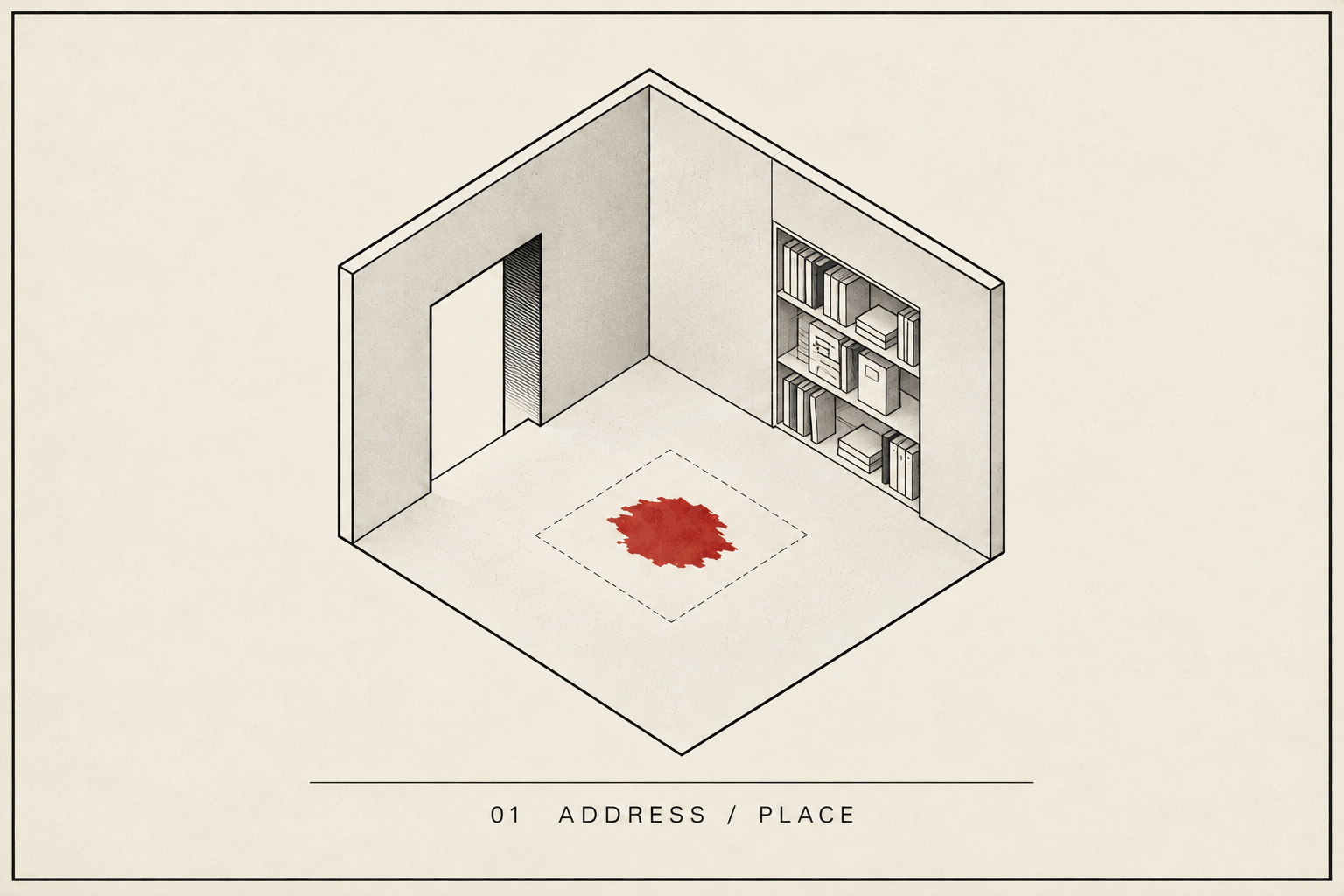
The early web gave writers an address. The platform era gave them an audience. The emerging agentic web may require something else: an environment that can be read and acted upon not only by people, but by software acting on their behalf.
This distinction changes the discussion around independent publishing considerably. The history is often told as a movement from the personal website to the social platform. A writer once registered a domain, maintained an archive and participated in a loose network of links. Social media later concentrated identity, discovery, distribution and conversation inside centrally operated systems. Pew's early research on blogs records the personal-address phase, while its later research on social media describes how many of blogging's social functions moved into network platforms. Independent publication survived, but much of the traffic and audience relationship moved elsewhere.
That history remains relevant, but it is no longer enough to describe the present.
A second displacement is now under way. Large language models, meaning machine-learning systems capable of interpreting and generating language across many tasks, are increasingly being connected to tools, browsers, databases and external services. Once connected in this way, they cease to function merely as conversational interfaces. They become agents capable of carrying out sequences of actions on behalf of a user. Current agent-building systems make this shift concrete by combining models with tools, orchestration, guardrails and observability.
The distinction is practical rather than rhetorical. A conventional search engine presents links. A conversational system may synthesize the information behind those links. An agentic system can go further: inspect services, compare alternatives, fill forms, invoke tools, make selections and complete transactions. The consequence for publishing is that the website itself begins to serve machines that may use its information without reproducing the human browsing session around which much of the web economy was designed.
This weakens one of the assumptions inherited from both blogging and social media: that value ultimately depends on attracting a human being to a page. An agent may not need the page. It may need a source, an identity, a permission boundary, structured information and an action that can be performed.
The distinction is important for Reframe because an estate built primarily as a richer publishing website would arrive just as the importance of websites as human destinations is becoming less certain. An estate capable of being understood and operated through machine interfaces is a different proposition.
Here the existing fountain.coach architecture becomes more interesting than the analogy with the blogosphere alone suggests. Its separation of domains, governance, instruments, publication surfaces and persistent stores can be read not merely as an architecture for human publication but as the beginnings of an addressable operational environment. The estate contains things that can be named, governed and acted upon.
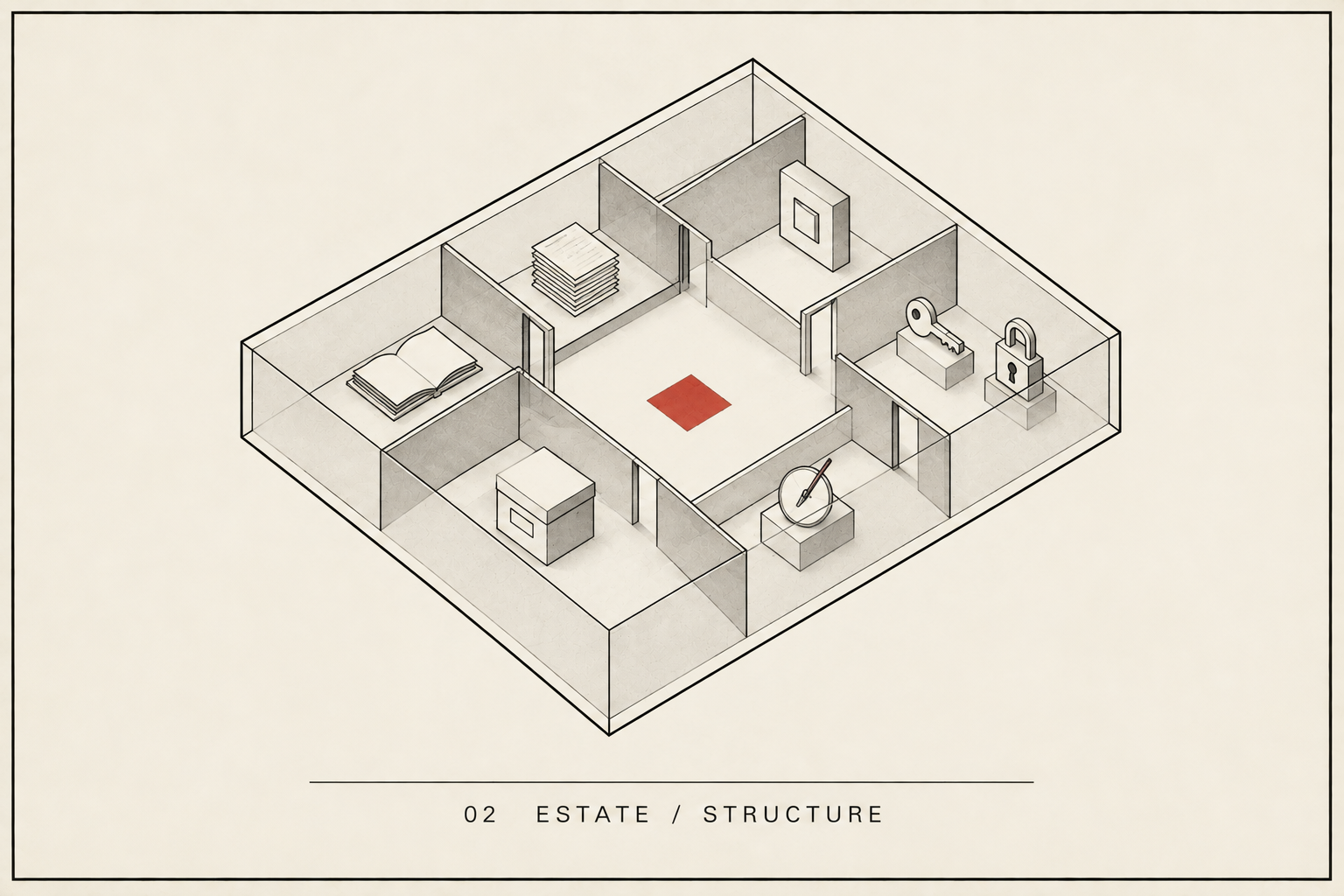
This matters in an agentic environment. A software agent needs more than prose. It needs to know what something is, whether it is authoritative, which actions are permitted, what inputs an action accepts and what result should follow. The web therefore begins to acquire two audiences. One is human. The other is computational.
The human audience reads an essay, examines a photograph, subscribes to a publication or commissions a writer. The computational audience may ask whether a particular text exists, establish its provenance, obtain a licensed passage, request a transformation, invoke a publishing operation, purchase access to a corpus or negotiate a service on behalf of another person.
The economic implications are potentially larger than the earlier transition from blogs to social networks. Social platforms centralized attention. Agentic systems may partially bypass attention as an economic unit. An agent does not necessarily have to persuade a person to click an advertisement, scroll through a feed or remain on a page. It may be given an objective and seek the most reliable route to accomplishing it.
For publishers and independent creators, this poses an obvious risk. If their work remains available only as undifferentiated material on webpages, it can become input to systems whose interaction with the source is difficult to observe and harder to monetize. Search-engine optimization was built around attracting visits from search results. Its successor may have to address a world in which the machine consumes the source directly and the user never arrives.
The corresponding opportunity is to become more than a source.
An estate can expose not merely content but capabilities. A writer's archive can be identifiable. A text can carry provenance and permissions. A publication can expose its authoritative version. An instrument can advertise a function. A service can describe the conditions under which an agent may invoke it. A transaction can take place at the estate without requiring the agent to impersonate a human navigating a sequence of visual interfaces.
This gives the word estate a second meaning beyond independence from platforms. An estate is not merely a place where a writer's material is stored. It can become a bounded computational actor on the network.
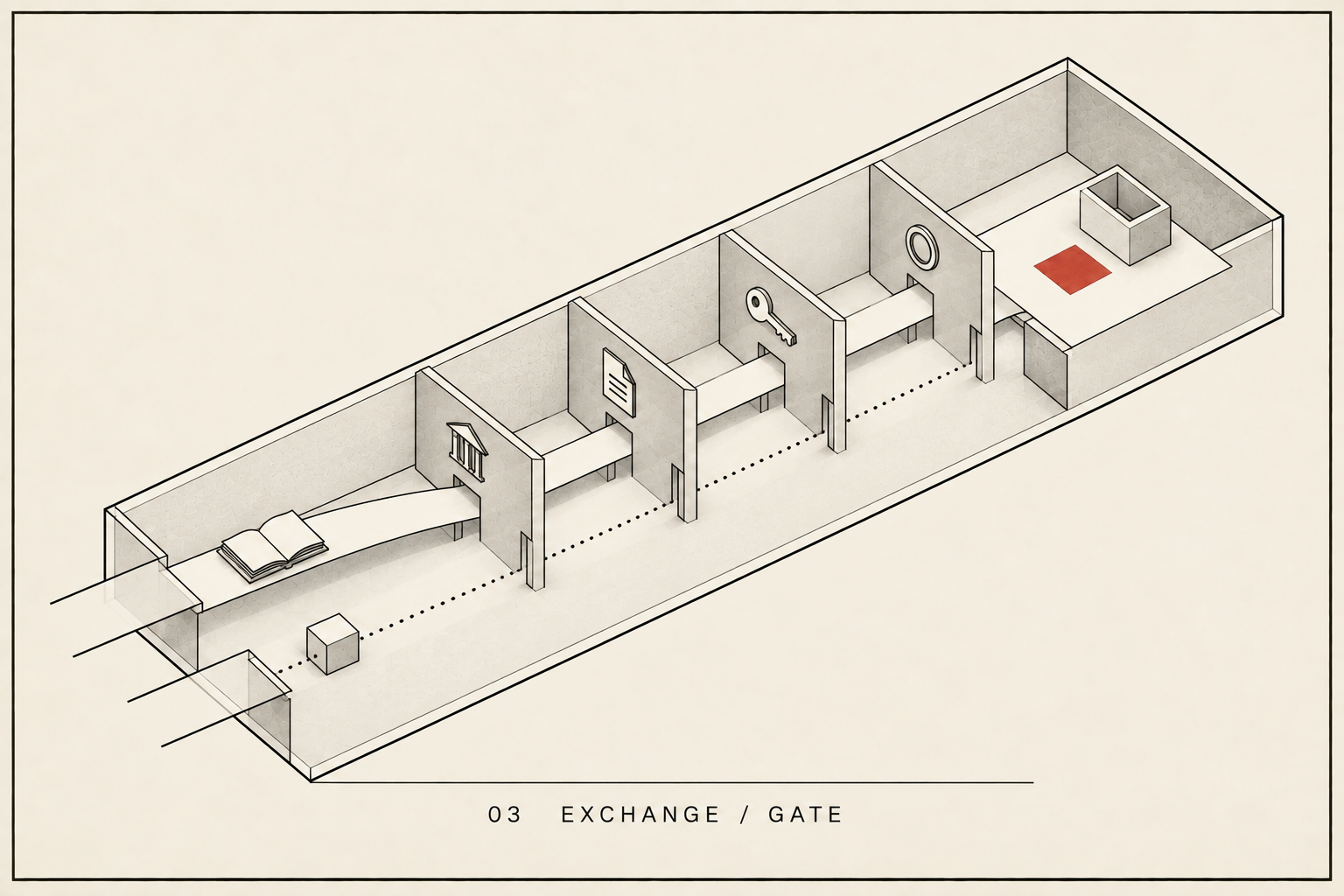
A future writer may therefore have two kinds of visitors. One may be a reader. The other may be the reader's agent. The second visitor might ask the estate whether a book can be licensed, whether an author is available on a particular date, whether a text may be quoted under specified conditions, whether a corpus can be queried, whether a translation may be commissioned, whether an instrument can transform a manuscript, or whether access can be purchased for a particular purpose.
That is materially different from web traffic. It is economic activity between systems.
Seen from this perspective, the weakness of the original blogosphere was not only that it lacked the infrastructure later concentrated by social media. It also lacked a means of representing the publisher as an operational entity. The blog could publish a document, but it had little standard machinery through which another system could discover what the publisher was capable of doing.
The platform solved this by absorbing capabilities into itself. Identity belonged to the platform, payments belonged to the platform, discovery belonged to the platform and application programming interfaces belonged to the platform.
Reframe suggests another possibility: these capabilities might belong to the estate.
The distinction becomes more consequential in an agentic web because artificial-intelligence agents reduce the advantage traditionally supplied by a centralized interface. If an agent can operate across many independently owned services, the user does not necessarily require all those services to be concentrated inside one application. What matters instead is whether the services are discoverable, interpretable and safely actionable.
This creates a potentially unusual business position for Reframe. A conventional Software as a Service company sells access to a centrally operated application. An estate infrastructure business could supply the technical conditions under which many independently owned entities expose content, identity and capabilities to both humans and agents.
The business value would then no longer depend primarily on human page views. It could arise from persistent services. An estate may pay for storage, computation, identity, publication and deployment. It may charge humans for subscriptions or access. It may also charge agents for licensed retrieval, computational operations, transactions or specialized instruments. Reframe could provide the infrastructure through which those interactions are authenticated, governed and accounted for without necessarily owning the underlying work or customer relationship.
This is a much stronger proposition than saying that writers should own websites. It also carries greater risks. Agentic systems may consolidate around a small number of providers just as social media did. Large artificial-intelligence companies may become the new distribution platforms. Agents may prefer proprietary integrations over open interfaces. Content producers may have little bargaining power. Automated interaction may increase the value of authoritative sources while reducing the value of intermediary presentation. None of these outcomes is settled.
The relevant question for Reframe is therefore not whether artificial intelligence makes the independent web more attractive in principle. It is whether an estate can become a sufficiently legible and capable participant in the agentic web that independence remains economically meaningful.
That question is experimentally answerable. Can an external agent identify the authoritative estate of a writer? Can it distinguish published work from drafts? Can it discover what the estate permits it to do? Can it invoke an instrument without acquiring unrestricted access to the underlying system? Can a writer establish conditions of use? Can the estate record what occurred? Can a transaction be attributed and settled? Can the resulting operation remain intelligible to the writer?
If those questions can be answered positively, the estate begins to acquire a function that neither the blog nor the social-media account possessed. It becomes an agent-addressable economic entity.
That possibility changes the Reframe business thesis. The system would not merely help a writer publish independently of a platform. It would help her establish an entity through which humans and machines can encounter her work, obtain authority to act upon it and enter governed economic relationships with it. The Store-owned estate edge, the typed publication graph, the template publishing path and the EstatePublisher authority are the architectural boundaries that make this hypothesis testable; they are not proof that the business has already been established.
The blogosphere made it possible to possess an address. Social media made it possible to accumulate an audience. The agentic web may make it necessary to possess an operational identity.
Reframe's speculative value lies in making that identity belong to the writer's estate rather than to the agent platform through which somebody happens to approach it.